PULMONARY FUNCTION TESTING
Diffusing Capacity of the Lung for Carbon Monoxide (DLCO) measures how effectively oxygen transfers from inhaled air directly into your bloodstream.
At PulmoCare Center @Sodepur, we use the DLCO test to obtain a precise picture of alveolar membrane health. It evaluates how easily gases move across the delicate barrier between your lung tissue and capillary blood vessels.
This diagnostic test is critical for detecting and tracking pulmonary fibrosis, emphysema, sarcoidosis, pulmonary hypertension, and other conditions that impede gas diffusion, guiding personalized treatment plans.
NON-INVASIVE & RAPID PROCEDURE
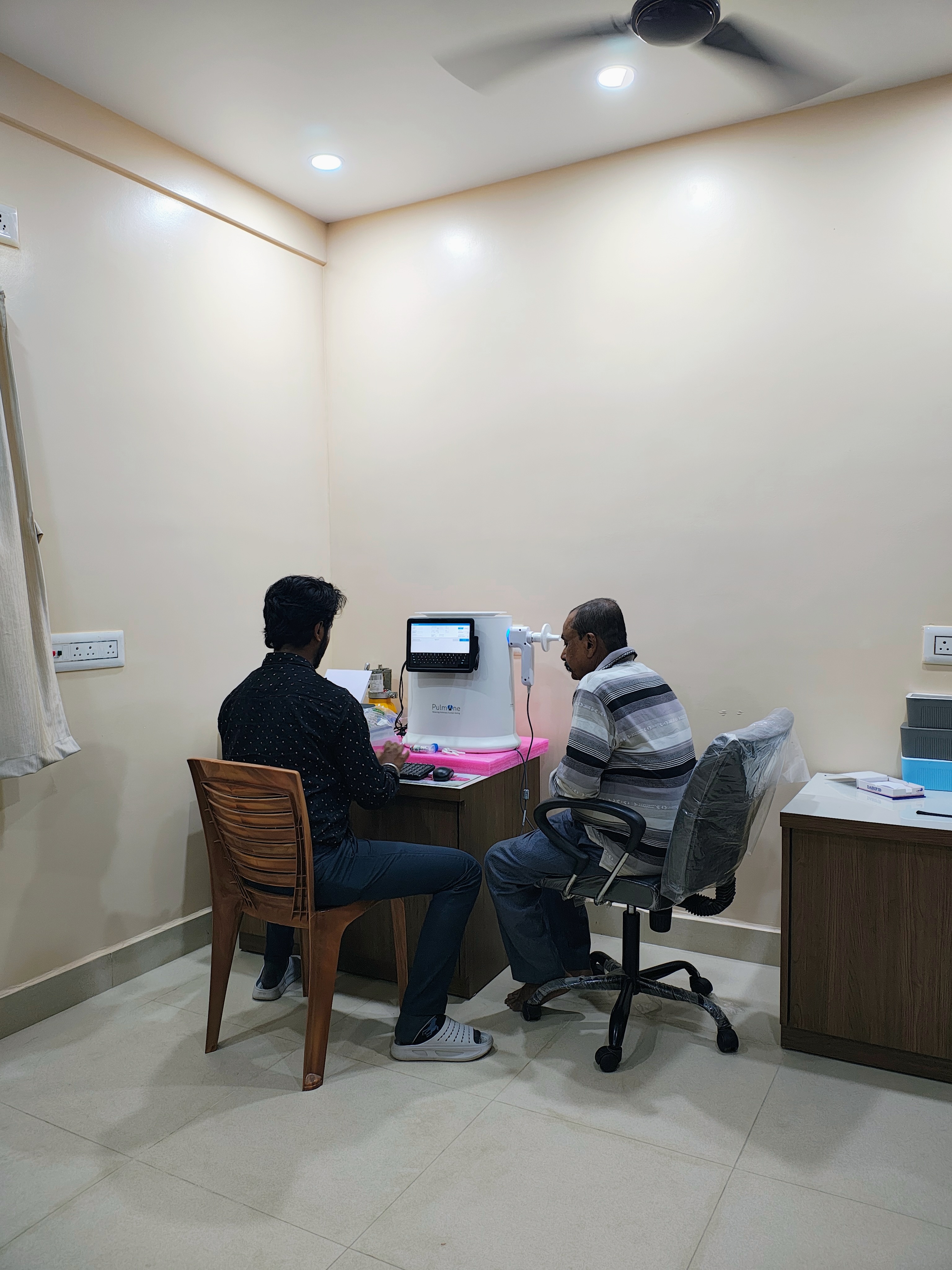
You will inhale a safe, microscopic tracer amount of carbon monoxide, hold your breath for approximately 10 seconds, and exhale. Our advanced sensors instantly measure absorption to quantify your lung diffusion capacity.
PULMONARY FUNCTION TESTING
The Diffusion Capacity of the Lung for Carbon Monoxide (DLCO) test is an advanced, non-invasive pulmonary assessment measuring how effectively inhaled oxygen moves from the alveolar spaces into the bloodstream.
Painless breath-based diagnostic
Quick and straightforward procedure
Gold standard for alveolar gas exchange
Diagnosis & staging of Interstitial Lung Diseases (ILD) such as pulmonary fibrosis.
Evaluation of emphysema and differentiation from other Chronic Obstructive Pulmonary Diseases (COPD).
Assessment and hemodynamic monitoring of pulmonary vascular conditions & Pulmonary Hypertension.
Monitoring treatment effectiveness and medication response for chronic respiratory conditions.
Pre-operative pulmonary risk assessment prior to surgical lung resections or cardiothoracic procedures.
No smoking or vaping for at least 6 hours prior to the test to avoid carboxyhemoglobin interference.
Avoid heavy meals prior to testing to ensure comfortable diaphragmatic excursion.
Refrain from vigorous exercise for 4–6 hours beforehand to stabilize baseline pulmonary circulation.
Inform the technologist about any recent blood transfusions or known hemoglobin levels.
Avoid alcohol consumption for 24 hours prior to the test for precise diagnostic readout.
HOW THE TEST WORKS
The patient breathes in a trace amount of carbon monoxide (CO) combined with an inert tracer gas (such as helium or methane) and comfortably holds their breath for approximately 10 seconds. The amount of CO absorbed during the breath-hold is accurately measured and corrected for the patient's individual lung volume. This provides a direct, highly sensitive index of gas exchange efficiency across the alveolar-capillary membrane.
Single Breath Hold Duration
Have questions or need to book your DLCO test?
Our respiratory diagnostics team at PulmoCare Center @Sodepur is here to guide you.
ADVANCED PULMONARY DIAGNOSTICS
At PulmoCare Center @Sodepur, we take pride in offering the most accurate Pulmonary Diffusion Capacity test for Carbon Monoxide (DLCO). Our state-of-the-art equipment ensures precise measurements, crucial for diagnosing and monitoring various lung conditions. Each test is performed by our highly trained and experienced technicians, ensuring comfort and reliable results. Trust our expertise for your respiratory health!
Ultra-precise gas diffusion measurement for accurate alveolar analysis
Certified respiratory technologists guiding you through every breath
Prompt, detailed clinical reporting reviewed by senior pulmonologists
Need Immediate Assistance?
PulmoCare Desk @Sodepur
Hospital-Grade Accuracy
Experienced Technicians
PATIENT RESOURCE & GUIDE
Everything you need to understand regarding diffusion testing, pulmonary function assessment, and test day preparation at PulmoCare Center @Sodepur.
Our respiratory specialists and diagnostic technicians are available to help guide your lung assessment journey.
Location & Clinical Support
PulmoCare Center @Sodepur Dedicated Pulmonary Lab & Diagnostics
The DLCO (Diffusing Capacity of the Lung for Carbon Monoxide) test measures how well oxygen moves from your lungs into your bloodstream. It helps assess the function of the air sacs (alveoli) and the small blood vessels (capillaries) in your lungs.
This test is crucial for diagnosing and monitoring various lung conditions such as emphysema, pulmonary fibrosis, sarcoidosis, and pulmonary hypertension. It can also assess the severity of lung disease and the effectiveness of treatment.
Avoid smoking for at least 24 hours before the test. Do not engage in strenuous exercise for at least 4 hours prior. Inform your doctor about any medications you are taking, especially oxygen therapy, and follow any specific instructions provided by PulmoCare Center @Sodepur staff.
You will be asked to breathe normally into a mouthpiece connected to a machine. Then, you'll take a deep breath of a special gas mixture (containing a small, harmless amount of carbon monoxide), hold it for about 10 seconds, and exhale. The machine measures how much of the carbon monoxide was absorbed by your lungs.
Your doctor will interpret your results in conjunction with other lung function tests and your medical history. A lower-than-normal DLCO value can indicate reduced gas exchange capacity, suggesting issues with the lung tissue or blood flow. Higher values are rare but can also be clinically significant in specific conditions.