Forced Oscillation Technique (FOT), also known as pulmonary oscillometry, is a non-invasive and effort-independent method used to measure the mechanical properties of the respiratory system. Unlike traditional spirometry, FOT does not require forced maneuvers, making it particularly suitable for children, elderly patients, or individuals with severe respiratory impairment. It works by applying small, oscillatory pressure waves to the airway during tidal breathing. By analyzing the response to these oscillations, FOT can assess airway resistance and reactance, providing valuable insights into the status of both large and small airways. This technique helps in early detection, diagnosis, and monitoring of various respiratory conditions like asthma, COPD, and cystic fibrosis, offering a more complete picture of lung function.
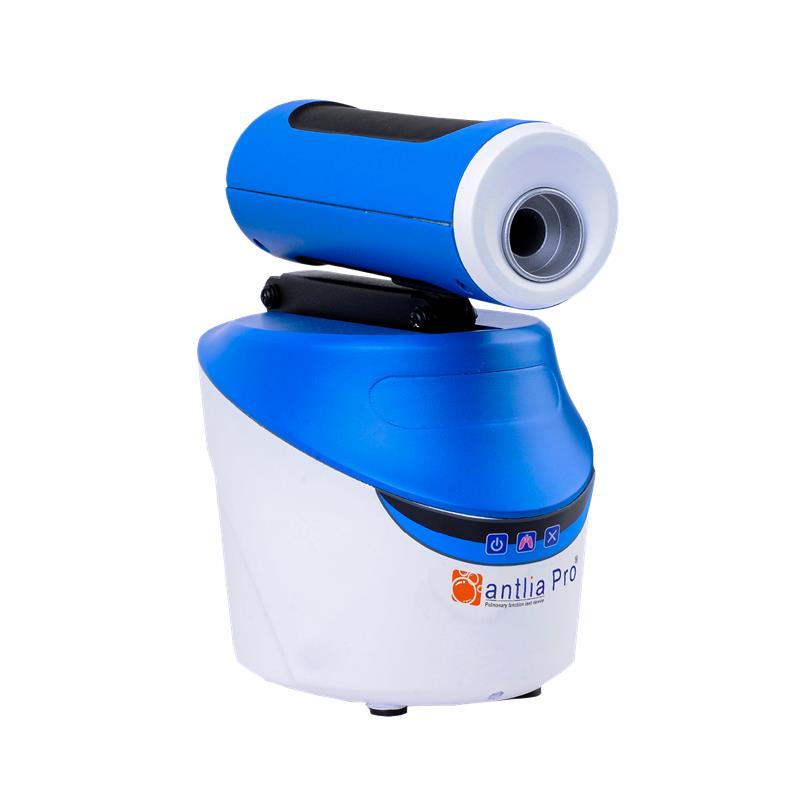
At PulmoCare Center Sodepur, we understand the importance of an accurate and comfortable diagnosis for children. The Forced Oscillation Technique (FOT) is an innovative and non-invasive tool, ideal for assessing lung function in the little ones, especially useful in the diagnosis of childhood asthma.
The FOT does not require forced expiratory effort, making it ideal for young children or those who cannot cooperate with traditional pulmonary function tests.
Provides valuable information about respiratory mechanics, allowing early detection of airway obstructions and evaluation of treatment.
A well-established and safe method for pulmonary evaluation at all ages, especially valuable in pediatric settings like our center in Sodepur.

Our team of specialists at PulmoCare Center Sodepur is ready to provide your child with the most advanced and compassionate care, using technologies like FOT for precise diagnosis and an effective treatment plan.
FOT is a non-invasive technique used to assess lung function, especially in patients who have difficulty performing forced spirometric maneuvers. It is particularly useful for:
During the FOT test, the patient breathes normally through a mouthpiece connected to a device. Small oscillations of pressure and airflow at various frequencies are applied to the respiratory system. The device measures how the respiratory system responds to these oscillations, providing information about:
To ensure accurate and optimal results, it is recommended to follow these preparation guidelines before an FOT test:
Forced Oscillometry (FOT) is a non-invasive technique to assess respiratory mechanics. It provides valuable information about airway resistance and reactance, even in patients who cannot perform forced spirometry maneuvers.
R5 measures the total resistance of the airways. R20 (or central R) reflects the resistance of the central airways. An increase in R5-R20 indicates obstruction of the small airways, common in asthma and COPD.
X5 represents lung elasticity and the behavior of small airways. A more negative value of X5 suggests increased heterogeneity and air trapping, often seen in obstructive lung diseases.
Fres is the frequency at which the reactance becomes zero. It is a sensitive indicator of small airways and pulmonary heterogeneity. An increase in Fres is associated with greater involvement of the small airways.
AX is the area under the reactance curve between the lowest frequency and the Fres. It is a global indicator of small airway obstruction and air trapping, and correlates well with residual volu
The FOT is a pulmonary function test that measures the resistance and reactance of the airways. It uses small pressure oscillations instead of forced respiratory efforts, making it ideal for patients who cannot perform conventional respiratory maneuvers, such as young children or people with severe conditions.
During an FOT test, you will be asked to breathe normally through a mouthpiece connected to a device that sends small air vibrations to your lungs. No forced exhalations or inhalations are required, just relaxed breathing. The test is quick and non-invasive.
FOT provides detailed measurements of lung mechanics, such as resistance (opposition to airflow) and reactance (lung elasticity). This helps doctors identify obstructions in the small airways, assess the severity of diseases like asthma or COPD, and monitor the response to treatment.
The FOT is particularly useful for young children, elderly people, patients with neuromuscular diseases, or those with severe respiratory limitations who cannot perform spirometry. It is also valuable for the early detection of small airway diseases and the monitoring of patients with asthma or COPD.
No, the FOT test is completely painless and well tolerated. Patients only need to breathe normally through the mouthpiece. The pressure oscillations are very small and barely noticeable. It is a comfortable and safe alternative to assess lung function.