HOME / LUNG VOLUME
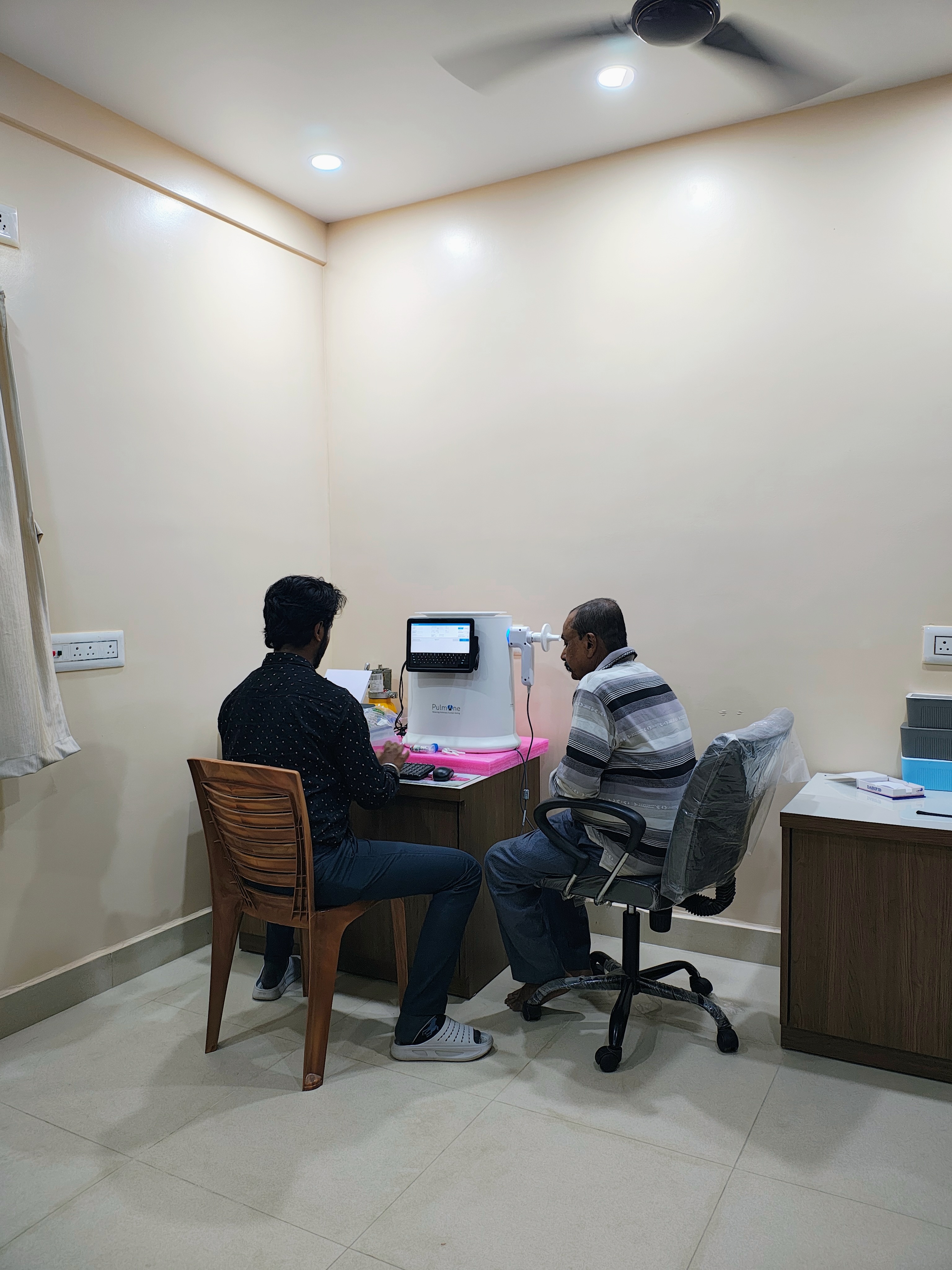
PulmoCare Center Sodepur is proud to feature the state-of-the-art MiniBox+ device for precise and comfortable lung volume measurements. This advanced technology provides rapid, accurate results, making your diagnostic experience efficient and stress-free. It's an essential tool for comprehensive respiratory assessment.
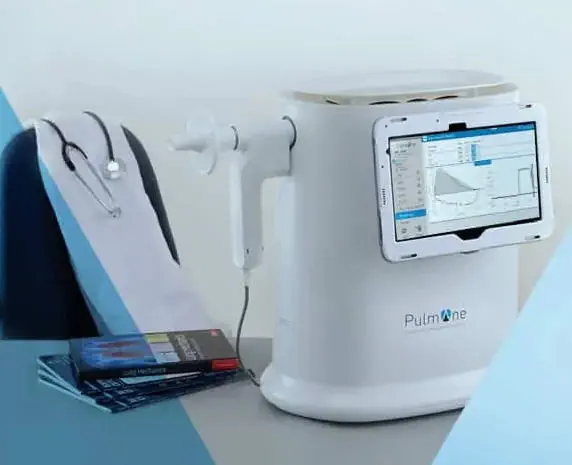
Accurate lung volume measurements help in identifying and differentiating between obstructive and restrictive lung diseases such as asthma, COPD, and pulmonary fibrosis.
Regular measurements allow doctors to track disease progression and assess how well treatments are working, enabling adjustments for optimal patient care.
Lung volume tests are vital before surgery, especially thoracic or abdominal procedures, to evaluate a patient's respiratory reserve and predict potential complications.
Measurement of lung volume is an essential diagnostic tool in pulmonology. It helps assess total lung capacity, residual volume, and functional residual capacity, providing crucial information about restrictive and obstructive lung diseases.
Total Lung Capacity (TLC): The maximum volume of air that the lungs can hold.
Residual Volume (RV): The volume of air that remains in the lungs after a maximal exhalation.
Functional Residual Capacity (FRC): The volume of air remaining in the lungs at the end of a normal exhalation.
Measurement of lung volume is recommended in patients with unexplained dyspnea, chronic cough, suspected obstructive diseases (COPD, asthma), or restrictive diseases (pulmonary fibrosis). An elevated RV suggests air trapping, while a reduced TLC indicates restriction. At PulmoCare Center @Sodepur, our specialists interpret these results for an accurate diagnosis and an effective treatment plan.
At PulmoCare Center @Sodepur, we are proud to have the MiniBox+ device, the latest technology for precise and rapid measurement of lung volume. This innovative equipment allows tests to be performed in a comfortable and less intimidating environment for the patient, offering reliable results that are vital for accurate diagnosis and clinical management.
MiniBox+: Precision and comfort in pulmonary assessment.
Find answers to your common questions about pulmonary volume tests and the MiniBox+ device at PulmoCare Center.
A pulmonary volume test measures the amount of air your lungs can hold and how your lung capacity functions. It helps diagnose and monitor various respiratory conditions.
It is crucial for assessing diseases such as asthma, COPD, pulmonary fibrosis, and other conditions that affect breathing. It provides detailed information that spirometry alone cannot offer.
The MiniBox+ is a cutting-edge device available at PulmoCare Center @Sodepur. It offers faster and more comfortable lung volume measurement, using advanced technology that is less invasive and highly accurate.
Avoid smoking or strenuous exercise at least one hour before the test. Also, refrain from using inhalers or specific respiratory medications on the day of the test, unless instructed otherwise by your doctor.
You will be asked to sit comfortably and breathe into a mouthpiece connected to the MiniBox+. The device will record your breathing patterns to accurately measure your lung volumes. The test is quick and usually takes less than 15 minutes.
Your results will be analyzed by our specialists in pulmonology. Generally, you can expect to discuss the results with your doctor at your next appointment or by phone within a few business days.