Spirometry, also known as Pulmonary Function Testing (PFT), is a common, non-invasive test used to assess how well your lungs are working. It measures the amount of air you can exhale and how quickly you can do so.
This essential test helps doctors diagnose and monitor various lung conditions, including asthma, Chronic Obstructive Pulmonary Disease (COPD), pulmonary fibrosis, and other respiratory disorders. It provides crucial data about your lung capacity and airflow, which is vital for effective treatment planning.
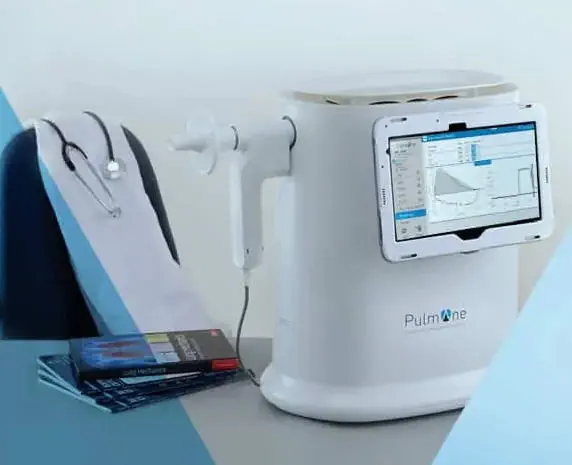
During the test, you'll be asked to breathe into a mouthpiece connected to a spirometer. Our experienced technicians at PulmoCare Center @Sodepur will guide you through simple breathing maneuvers to ensure accurate and reliable results.
Understanding the preparation and procedure of spirometry is key to obtaining accurate results. Here we explain what you need to know before and during your test.
Avoid heavy meals, alcohol, and caffeine at least 2 hours before the test.
Do not smoke for at least 1 hour before the exam.
Consult your doctor about the use of bronchodilators or inhalers before the test.
Avoid vigorous exercise right before the appointment.
Wear comfortable, loose clothing that does not restrict your breathing.
You will be asked to sit comfortably and a clip will be placed on your nose.
He will breathe through a mouthpiece connected to the spirometer, which measures the air he inhales and exhales.
You will be asked to inhale as deeply as possible and then exhale forcefully and quickly, completely emptying your lungs.
This process will be repeated several times to ensure consistent and accurate results.
Accurate spirometry results are crucial for effective diagnosis and management of respiratory conditions. At PulmoCare Center Sodepur, we understand that the quality of both our equipment and our staff directly impacts the reliability of your test. Discover how we ensure the highest standards for your peace of mind.
We use only the latest generation of spirometry machines, rigorously calibrated to provide precise and consistent measurements. Our cutting-edge technology minimizes errors and ensures reliable data for your doctor.
Our team of certified spirometry technicians is highly trained and experienced. They guide you through each step of the test with patience and expertise, ensuring optimal performance and the most accurate results possible.
Here you will find answers to the most common questions patients have about the spirometry process at PulmoCare Center @Sodepur.
A spirometry test is a common and non-invasive exam that measures the amount of air you can inhale and exhale, and the speed at which you can exhale air from your lungs. It is a key tool for diagnosing and monitoring lung diseases.
Your doctor may request a spirometry to: investigate symptoms such as chronic cough, shortness of breath, or wheezing; diagnose conditions like asthma or COPD; monitor the progression of lung diseases; or assess the effectiveness of a treatment.
You will be asked to avoid smoking, drinking alcohol or coffee, and eating a heavy meal during the 4-6 hours prior to the test. You may also be asked to avoid certain inhaler medications before the test; consult your doctor.
He will sit down and a clip will be placed on his nose. He will be instructed to take a deep breath and then blow with maximum strength and speed into a mouthpiece connected to the spirometer. He will have to repeat this several times to obtain accurate results.
Spirometry testing is not painful. However, you may feel a little tired, dizzy, or cough after blowing forcefully several times. Our staff will guide you and allow you to rest between attempts.
The test itself usually lasts between 15 and 30 minutes, including preparation time and the multiple repetitions required to ensure accuracy. The total time at the clinic may be slightly longer.
The results of the spirometry are analyzed to evaluate your lung function compared to the expected values for your age, height, sex, and ethnic background. Your doctor will discuss the results with you and explain whether they are normal or indicate a lung condition and the next steps to follow.